Product Description
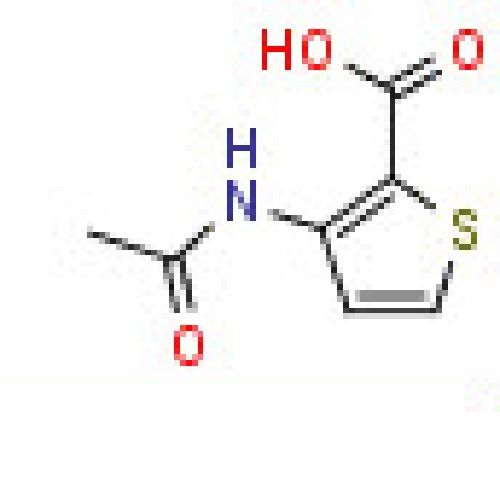
Chemical Name: 3-(Acetylamino)thiophene-2-carboxylicacid
Synonyms :3-acetamidothiophene-2-carboxylic acid
| 3-(Acetylamino)thiophene-2-carboxylic acid
|3-(acetylamino)-2-thiophenecarboxylic acid
| 3-acetamido-2-thiophenecarboxylic acid
Cas No : 50901-18-3
Purity : 95%
MolecularFormula : C7H7NO3S
Molecular Weight:185.2
Appearance:SolidHigh Purity and Reliable QualityThis compound offers high chemical purity (minimum 98%) with a strict impurity threshold, making it ideal for precise research and synthesis needs. Its controlled physical properties help ensure reliable, reproducible results in laboratory settings.
Safe Handling and Storage RecommendationsTo preserve stability, 3-(Acetylamino)thiophene-2-carboxylic acid should be handled with gloves, protective clothing, and eye protection, and stored in sealed containers away from light and moisture. When stored under these conditions, it maintains its effectiveness for up to two years.
Versatile Applications in SynthesisAs a reagent-grade material, this compound finds extensive use in pharmaceutical intermediate production and organic synthesis pathways. Its compatibility with various organic solvents enhances its applicability in both academic and industrial research.
FAQs of 3-(Acetylamino)thiophene-2-carboxylic acid:
Q: How should 3-(Acetylamino)thiophene-2-carboxylic acid be stored for optimal shelf life?
A: Store the compound in a cool, dry location, away from direct light, and ensure it is tightly sealed in HDPE containers or glass bottles to preserve its integrity for up to two years.
Q: What precautions are necessary during the handling process?
A: It is essential to use gloves, suitable protective clothing, and eye protection while handling the compound, even though it is not classified as hazardous under GHS, to maintain laboratory safety standards.
Q: When is this compound typically used in a research context?
A: It is employed mainly during the development of pharmaceutical intermediates and in organic synthesis procedures in research laboratories.
Q: Where is this product ideally utilized?
A: This compound is designated exclusively for laboratory or chemical synthesis environments, and it is recommended for use by trained professionals in research or academic institutions.
Q: What are the advantages of using this reagent grade compound?
A: The high purity level and consistent solid crystalline form make it especially valuable for reliable, reproducible outcomes in analytical and synthesis applications.
Q: How can the compound be dissolved for use in reactions?
A: While only slightly soluble in water, it dissolves readily in organic solvents, making it suitable for diverse synthetic methodologies that require organic media.
Q: What benefits does its stable and non-poisonous nature provide?
A: Its stability and non-poisonous classification under standard handling conditions contribute to safer storage and handling while reducing the risk in conventional laboratory operations.






 Send Inquiry
 Send Inquiry
 Send SMS


