Product Description
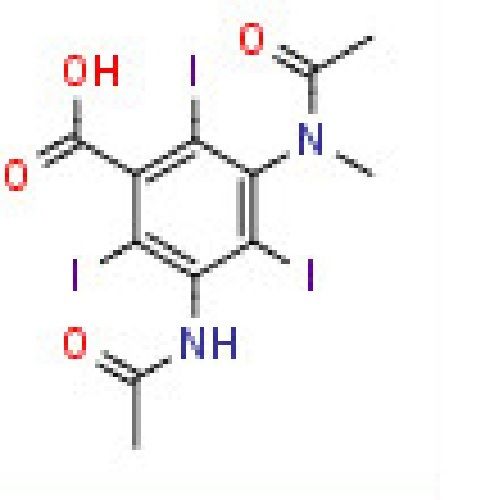
Chemical Name: 3-Acetamido-2,4,6-triiodo-5-(N-methylacetamido)benzoicacid
Synonyms :Metrizoate| Acidemetrizoique| Acidum metrizoicum
Cas No : 1949-45-7
Purity : 98%
MolecularFormula : C12H11I3N2O4, Molecular Weight : 627.9
Appearance: SOLIDPharmaceutical Intermediate for Advanced DiagnosticsRenowned for its critical role in pharmaceutical manufacturing, 3-Acetamido-2,4,6-triiodo-5-(N-methylacetamido)benzoic acid serves as a primary intermediate in contrast agent synthesis. Its high purity ensures consistent performance, making it an indispensable component in laboratory research and diagnostic imaging sectors.
Reliable and Safe Storage SolutionsPackaged in robust 25 kg drums or custom quantities, this product is designed for ease of handling and transport. It retains stability and purity when stored in cool, dry places, shielded from light and moisture. Its non-hazardous nature further streamlines logistical and regulatory processes.
Quality Assurance and ComplianceStrict production controls limit impurities to 2%, ensuring compliance with pharmaceutical standards. The product is classified under HS Code 29242990 and is registered with EINECS No: 214-626-0. Each batch is characterized by a crystalline, odorless appearance, supporting reliable identification and consistent formulation.
FAQs of 3-Acetamido-2,4,6-triiodo-5-(N-methylacetamido)benzoic acid:
Q: How should 3-Acetamido-2,4,6-triiodo-5-(N-methylacetamido)benzoic acid be stored for maximum shelf life?
A: For optimal shelf life, store the compound in a cool, dry location away from direct sunlight and moisture. When stored under these recommended conditions, the product maintains its stability and effectiveness for up to two years from the date of manufacture.
Q: What is the primary application of this compound in the pharmaceutical industry?
A: The main application is as an intermediate in the synthesis of contrast agents used for diagnostic imaging. It plays a pivotal role in laboratory research and pharmaceutical production, contributing to the development of effective imaging solutions.
Q: When is the compound considered safe for transport, and under what conditions?
A: This substance is classified as non-hazardous for transport, allowing it to be shipped under ambient temperature without special handling or regulatory restrictions, providing convenience and safety in distribution.
Q: Where is the compound commonly utilized aside from pharmaceutical manufacturing?
A: Aside from its chief role in pharmaceutical production, particularly in contrast agent synthesis, the compound is also employed in specialized laboratory research settings that require high-purity iodine intermediates.
Q: What benefits does this products high purity offer to users?
A: A purity level exceeding 98% ensures consistent results, minimal side reactions, and reliable incorporation into sensitive formulations such as pharmaceutical diagnostics, ultimately enhancing the quality and reliability of the final product.
Q: How is the compound typically packaged and delivered to customers?
A: The product is generally supplied in 25 kg drums, but customized packaging is available upon request to meet specific project or logistical requirements.
Q: What is the best process for dissolving this compound for use in formulations?
A: Since the compound dissolves readily in DMSO but is only slightly soluble in water, it is recommended to use DMSO as the solvent for preparing concentrated solutions, ensuring optimal incorporation into the desired application.






![(3Ar*,6ar*)-benzylhexahydropyrrolo [3,2-b]pyrrole-1(2h)-carboxylate](https://cpimg.tistatic.com/10008368/b/4/-3Ar-6ar-benzylhexahydropyrrolo-3-2-b-pyrrole-1-2h-carboxylate.jpg?tr=w300)
![2-[4-(Aminocarbonyl)phenoxy]quinoline-4-carboxylic acid](https://cpimg.tistatic.com/09760888/b/4/2-4-Aminocarbonyl-phenoxy-quinoline-4-carboxylic-acid.jpg?tr=w300)
 Send Inquiry
 Send Inquiry
 Send SMS
 Call Me Free


