Product Description
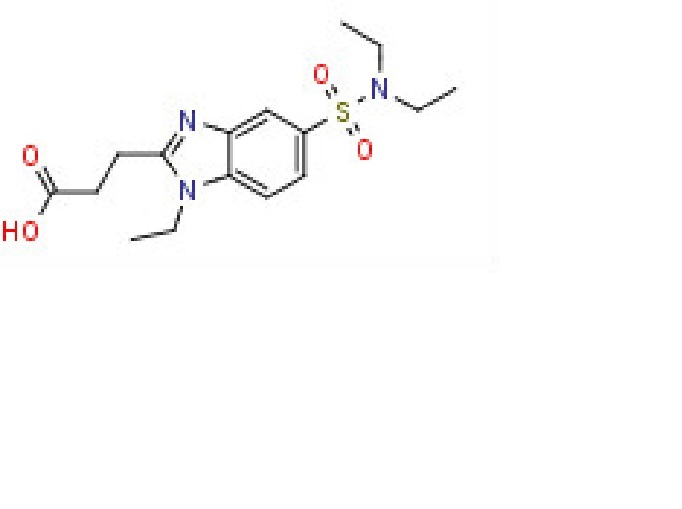
Chemical Name: 3-(5-Diethylsulfamoyl-1-ethyl-1h-benzoimidazol-2-yl)-propionicacid
Synonyms :3-(5-(diethylsulfamoyl)-1-ethyl-1H-1,3-benzodiazol-2-yl)propanoicacid
CAS No : 735322-09-5
Purity : 95%
MolecularFormula :C16H23N3O4S
Molecular Weight:353.4
Key Features and PropertiesThis compound presents with a purity level above 98%, making it suitable for pharmaceutical applications. It remains stable in a cool, dry environment and is supplied as a crystalline powder. Odorless or with a slight characteristic smell, it has low toxicity when handled according to instructions, does not decompose under normal conditions, and offers a shelf life of up to 24 months.
Applications and UsagePrimarily used as an intermediate for the synthesis of active pharmaceutical ingredients, 3-(5-Diethylsulfamoyl-1-ethyl-1H-benzoimidazol-2-yl)-propionic acid is a valuable resource within pharmaceutical research and development laboratories. Its high purity and stability make it suitable for rigorous scientific work, including drug discovery and related experimental procedures.
FAQs of 3-(5-Diethylsulfamoyl-1-ethyl-1h-benzoimidazol-2-yl)-propionic acid:
Q: How should 3-(5-Diethylsulfamoyl-1-ethyl-1H-benzoimidazol-2-yl)-propionic acid be stored for optimal stability?
A: It is best to store the compound in a cool, dry, and well-ventilated area, away from incompatible materials. Sealed HDPE bottles or drums help maintain its stability and ensure a shelf life of up to 24 months under recommended conditions.
Q: What is the primary application of this product in the pharmaceutical industry?
A: This compound mainly serves as an intermediate in the synthesis of active pharmaceutical ingredients and is used in research and development settings within the pharmaceutical sector.
Q: When does this product begin to decompose, and what is its approximate melting point?
A: 3-(5-Diethylsulfamoyl-1-ethyl-1H-benzoimidazol-2-yl)-propionic acid decomposes before boiling and has a melting point of approximately 140145C.
Q: Where is this product typically supplied from and what is the method of packaging?
A: It is typically supplied in India by various suppliers and traders, packaged securely in sealed HDPE bottles or drums to preserve quality during shipping and storage.
Q: What process should be followed for handling this compound safely in the laboratory?
A: Standard laboratory personal protective equipment should be used, and handling should occur in a well-ventilated area. While the product is not classified as hazardous under normal conditions, good laboratory practices should be followed to prevent accidental exposure or contamination.
Q: Can this compound be used in applications outside of laboratory research?
A: No, this product is designated for laboratory and research use only and is not intended for medical, veterinary, or household purposes.
Q: What benefits does this compound offer to researchers and pharmaceutical manufacturers?
A: Researchers benefit from its high purity and stability, making it a reliable intermediate compound for drug synthesis. Its suitability for use in regulated laboratory environments enhances the precision and reproducibility of pharmaceutical research.







 Send Inquiry
 Send Inquiry
 Send SMS
 Call Me Free


