Product Description
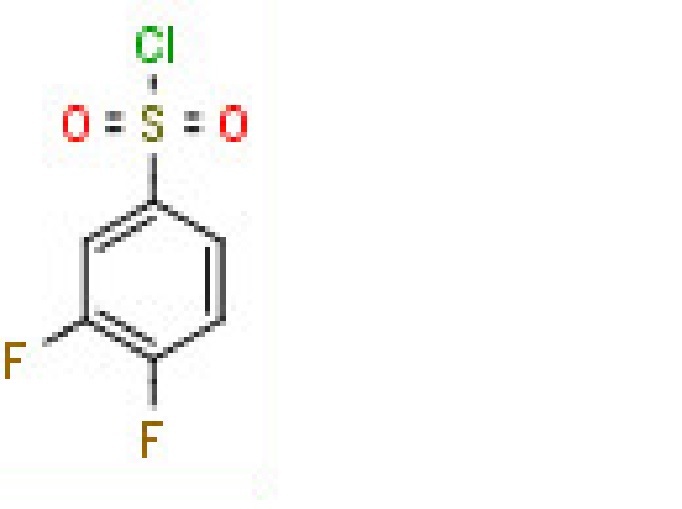
Chemical Name: 3,4-Difluorobenzenesulfonyl chloride
Synonyms :3,4-Difluorobenzene-1-Sulfonyl Chloride
CAS No : 145758-05-0
Purity : 97%
MolecularFormula :C6H3ClF2O2S
Molecular Weight:212.6
Appearance : LiquidKey Properties and Hazard InformationThis compound features a reactive sulfonyl chloride group and exhibits high chemical reactivity, making it invaluable in synthesis. It is toxic (Hazard Class 6.1) and sensitive to moisture, with a pungent odor and crystalline form. Its stability is maintained when stored in cool, dry, and ventilated environments, away from incompatible substances like strong bases and oxidizers.
Safe Handling and Storage RecommendationsProper handling includes use of personal protective equipment and working in well-ventilated areas. The product should be stored in tightly sealed, HDPE-lined containers to prevent moisture ingress. Always follow local transport regulations due to its toxic nature, and avoid conditions that cause decomposition, which may release hazardous gases.
Applications in Synthesis and Industry3,4-Difluorobenzenesulfonyl chloride is essential for synthesizing pharmaceutical intermediates, agrochemicals, and various organic compounds. Its reactivity allows chemists to introduce sulfonyl groups efficiently, facilitating the development of novel active molecules for commercial and research uses.
FAQ's of 3,4-Difluorobenzenesulfonyl chloride:
Q: How should 3,4-Difluorobenzenesulfonyl chloride be safely handled and stored?
A: Always use personal protective equipment, work in a well-ventilated area, and avoid skin or respiratory exposure. Store in a tightly sealed HDPE-lined container, out of direct contact with moisture, in a cool, dry, and well-ventilated space.
Q: What are the main applications and benefits of using 3,4-Difluorobenzenesulfonyl chloride?
A: It serves as a potent sulfonylating agent in the synthesis of pharmaceutical intermediates, agrochemicals, and specialty organic compounds, enabling efficient introduction of sulfonyl groups for advanced compound creation.
Q: When does decomposition occur, and what hazardous materials can be released?
A: Decomposition takes place at its boiling point (251C) or under fire conditions, releasing toxic gases such as hydrogen chloride, sulfur oxides, and hydrogen fluoride, which require appropriate emergency measures.
Q: Where should this compound be transported and stored to maximize shelf life?
A: Transport and storage should occur in HDPE-lined drums or bottles, in compliance with local hazard regulations. Keep the product in a cool, dry, and ventilated area, away from strong bases, oxidizers, and water to preserve stability and a shelf life of up to 2 years.
Q: What personal precautions are needed to work safely with this material?
A: Wear chemical-resistant gloves, safety goggles, and protective clothing. Operate in a well-ventilated environment or use appropriate fume extraction to minimize exposure to toxic vapors or dust.
Q: How insoluble is 3,4-Difluorobenzenesulfonyl chloride in water, and which solvents can dissolve it?
A: This compound is insoluble in water but dissolves readily in organic solvents such as dichloromethane and chloroform, making it suitable for diverse organic synthesis processes.







 Send Inquiry
 Send Inquiry
 Send SMS
 Call Me Free


