Product Description
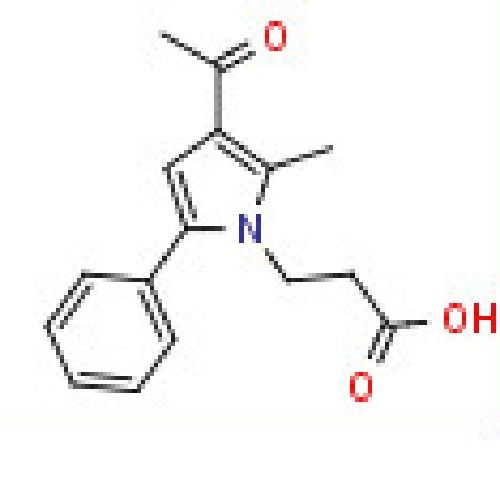
Chemical Name: 3-(3-Acetyl-2-methyl-5-phenyl-1h-pyrrol-1-yl)propanoicacid
Synonyms :3-(3-acetyl-2-methyl-5-phenyl-1H-pyrrol-1-yl)propanoic acid
|3-(3-ACETYL-2-METHYL-5-PHENYL-1H-PYRROL-1-YL)-PROPANOICACID
|3-(3-acetyl-2-methyl-5-phenylpyrrol-1-yl)propanoic acid
Cas No : 396123-28-7
Purity : 95%
MolecularFormula : C16H17NO3
Molecular Weight :271.3High Purity for Reliable ResultsWith a purity rating of 98%, this compound ensures exceptional reliability for research applications. Its off-white to pale yellow crystalline form is free from impurities, facilitating consistent synthesis processes in pharmaceutical development and chemical research.
Safe Handling and Non-Hazardous CharacteristicsThis compound is classified as non-hazardous under routine laboratory handling, offering added peace of mind to researchers. Its stability, absence of toxic properties, and straightforward storage requirements make it a practical choice for frequent laboratory use.
Compatibility and Versatile ApplicationsCompatible with a variety of organic solvents such as DMSO and ethanol, this intermediate is slightly soluble in water, enhancing its versatility in drug synthesis. Researchers benefit from its adaptability across numerous organic reaction media.
FAQ's of 3-(3-Acetyl-2-methyl-5-phenyl-1h-pyrrol-1-yl)propanoic acid:
Q: How should 3-(3-Acetyl-2-methyl-5-phenyl-1h-pyrrol-1-yl)propanoic acid be stored to maintain its stability?
A: To preserve stability and purity, store the compound in a tightly sealed container below 25C, protected from direct sunlight and moisture, in a cool and dry environment.
Q: What is the recommended usage of this compound in research laboratories?
A: This laboratory/reagent grade compound is primarily utilized as an intermediate in pharmaceutical research and chemical synthesis processes. It is intended strictly for scientific investigation and not for human consumption.
Q: When can this compound be expected to expire under proper storage conditions?
A: If stored appropriately, the compound has a shelf life of up to 24 months from the date of packaging, ensuring long-term usability for ongoing research projects.
Q: Where can this product be sourced and in which packaging formats is it available?
A: The compound is supplied and traded in India, with packaging options including HDPE bottles and glass vials to suit different laboratory requirements.
Q: What precautions should be taken during handling and storage of this compound?
A: Avoid exposure to sunlight and moisture, and always keep the product container tightly sealed. Standard laboratory safety practices should be followed.
Q: How does the synthetic origin of this compound benefit pharmaceutical research?
A: Being synthetically derived, the compound boasts high purity and reproducibility, helping researchers achieve consistent results in drug development and chemical synthesis.
Q: Is this compound regulated for transport and what is its safety profile?
A: It is not regulated for transport and considered non-hazardous under normal handling conditions. Standard laboratory protocols are sufficient for its safe use and management.






![2-Amino-4,7-dihydro-5h-thieno[2,3-c]pyridine-3,6-dicarboxylic acid 6-benzyl ester 3-ethyl ester](https://cpimg.tistatic.com/09864395/b/4/2-Amino-4-7-dihydro-5h-thieno-2-3-c-pyridine-3-6-dicarboxylic-acid-6-benzyl-ester-3-ethyl-ester.jpg?tr=w300)
 Send Inquiry
 Send Inquiry
 Send SMS
 Call Me Free


