Product Description
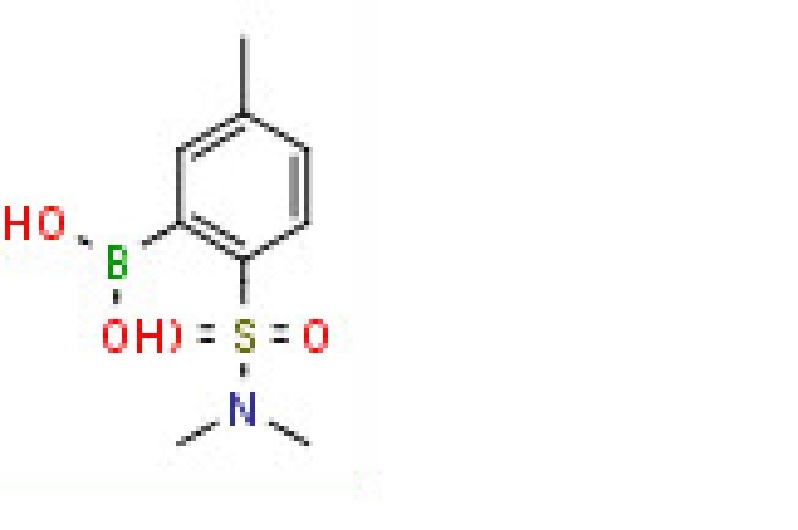
Chemical Name:2-(Dimethylsulfamoyl)-5-methylphenylboronic acid
Synonyms : 2-(DIMETHYLSULFAMOYL)-5-METHYLPHENYLBORONICACID
CAS No : 2377610-24-5
Purity : 98%
MolecularFormula : C9H14BNO4S
Molecular Weight:243.1
Appearance : SolidReliable Pharmaceutical and Synthetic IntermediateThis compound is widely adopted in the synthesis of pharmaceuticals and organic compounds, making it highly valuable for laboratory researchers and industrial chemists. Its high purity and predictable reactivity ensure excellent performance in Suzuki-Miyaura cross-coupling reactions and related synthetic processes, providing a dependable building block for complex molecule construction.
Safe Handling and Storage2-(Dimethylsulfamoyl)-5-methylphenylboronic acid is stable under normal conditions and safely packaged to limit exposure to air and moisture. Store the product tightly closed in a cool, dry, and ventilated environment, away from heat and light, for optimal stability. With a shelf life of up to two years, it remains a reliable option for long-term research and industrial use.
FAQ's of 2-(Dimethylsulfamoyl)-5-methylphenylboronic acid:
Q: How should 2-(Dimethylsulfamoyl)-5-methylphenylboronic acid be safely stored?
A: For best results, store this compound in a tightly closed container in a cool, dry, and well-ventilated area, away from moisture and light. This preserves product integrity and maintains its shelf life.
Q: What are the recommended personal protective measures when handling this compound?
A: Wear suitable personal protective equipment such as gloves, safety goggles, and protective clothing. Avoid inhalation, and prevent contact with skin and eyes during handling.
Q: When is this compound typically used in synthesis?
A: 2-(Dimethylsulfamoyl)-5-methylphenylboronic acid is mainly used in Suzuki-Miyaura cross-coupling reactions, serving as an intermediate for the production of pharmaceutical and organic compounds.
Q: Where is this chemical commonly applied?
A: This boronic acid derivative is commonly applied in research laboratories and industrial settings, especially in the synthesis of pharmaceuticals and complex organic molecules.
Q: What benefits does this compound offer in cross-coupling reactions?
A: Its high purity and stability provide reliable and reproducible results, making it an effective reagent for cross-coupling and ensuring efficient synthetic outcomes.
Q: How is the product typically packaged and transported?
A: It is packed in sealed polyethylene bottles or amber glass vials to protect against moisture. The compound is not regulated as hazardous for transportation, simplifying logistics.






 Send Inquiry
 Send Inquiry
 Send SMS


