Product Description
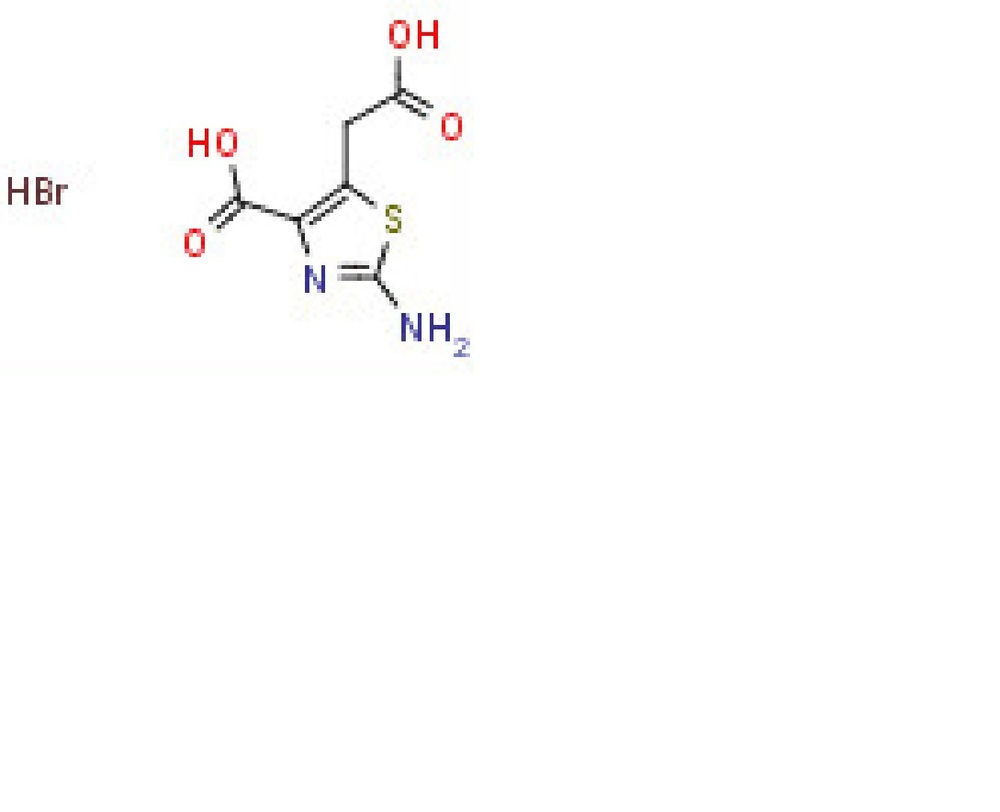
Chemicalname:2-Amino-5-(carboxymethyl)-1,3-thiazole-4-carboxylicacid hydrobromide
Synonyms:
Cas no: 89640-87-9
Purity: 95%
Molecular formula: C6H6N2O4S.BrH
Molecular Weight: 283.1Versatile Reagent for Advanced SynthesisThis compound caters to researchers and scientists seeking a reliable intermediate for organic synthesis and drug development. Its high purity and superior solubility facilitate precise experimentation, making it an essential reagent for the synthesis of complex molecules and pharmaceuticals. The hydrobromide form ensures compatibility with a range of aqueous systems.
Safety and Handling SimplifiedNot classified as hazardous under GHS, this product presents minimal risk during laboratory handling when standard precautions are followed. Use suitable personal protective equipment and avoid creating dust. Its odorless and non-poisonous nature further supports safe usage in varied research environments.
Flexible Packaging and StorageAvailable in customized quantities, the compound is easy to order according to your project's scale. Packaged to maintain optimal stability, it boasts a shelf life of over 24 months if stored in a cool, dry location, protected from light and moisture. The robust stability simplifies long-term storage planning.
FAQ's of 2-Amino-5-(carboxymethyl)-1,3-thiazole-4-carboxylic acid hydrobromide:
Q: How should 2-Amino-5-(carboxymethyl)-1,3-thiazole-4-carboxylic acid hydrobromide be stored for maximum stability?
A: It should be kept in a cool, dry place, away from light and moisture. Proper storage in tightly sealed containers preserves its stability and ensures a shelf life of at least 24 months.
Q: What are the primary uses or benefits of this compound in research and industry?
A: The compound acts as an intermediate in the synthesis of biologically active molecules, especially in organic, pharmaceutical, and biochemical research. The hydrobromide salt increases water solubility, simplifying integration into laboratory protocols.
Q: When should personal protective equipment be used while handling this material?
A: Personal protective equipment, such as gloves and safety glasses, should always be used when handling this powder, even though it is non-poisonous and not hazardous, to prevent dust formation and ensure laboratory safety.
Q: Where can this compound be sourced for laboratory or research purposes?
A: The compound is available from chemical suppliers and traders in India and internationally, supplied in customizable quantities (10 g, 25 g, 100 g, and more) to meet specific research requirements.
Q: What is the process for dissolving this compound in water?
A: Simply add the crystalline powder to water with gentle stirring. As it is highly soluble, it dissolves readily, especially at room temperature, making sample preparation straightforward.
Q: Is this compound considered toxic or dangerous for transportation?
A: No, it is not considered poisonous when handled properly in a laboratory setting, nor is it classified as dangerous goods for transport. Standard regulatory procedures apply without additional hazard requirements.
Q: How does the hydrobromide salt form enhance this compound's performance in research applications?
A: The hydrobromide form increases the compound's solubility in water, facilitating its use in aqueous systems and making it more adaptable for various organic and pharmaceutical synthesis processes.






 Send Inquiry
 Send Inquiry
 Send SMS


