Product Description
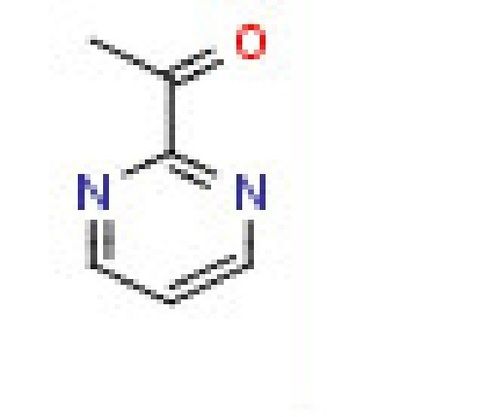
Chemical Name: 2-Acetylpyrimidine
Synonyms : 1-(2-Pyrimidinyl)ethanone
1-(Pyrimidin-2-yl)ethan-1-one
1-pyrimidin-2-ylethanone
Cas No : 53342-27-1
Purity : 98%
Molecular Formula :C6H6N2O
Molecular Weight: 122.1
Appearance:LiquidPhysical Properties and Stability2-Acetylpyrimidine has a crystalline appearance and is characterized by a melting point of 70-74C. It is stable under normal temperature and pressure and should be stored in a tightly closed container in a cool, dry, and well-ventilated area to maximize its shelf life, which is typically 2 years. Its density is 1.163 g/cm3 and it is soluble in several organic solvents.
Applications and UsagePrimarily used as an intermediate for pharmaceuticals, agrochemicals, and organic synthesis, 2-acetylpyrimidine is suitable for research and analytical purposes. Its high purity level makes it an ideal reagent for fine chemical synthesis in laboratory environments. The compound is not classified as hazardous under GHS and is recommended for use exclusively in research settings.
Packaging and Regulatory Compliance2-Acetylpyrimidine is provided in secure HDPE or glass bottles, typically in sizes of 25g, 100g, or 500g, with options for customization. It is listed for laboratory use only; regulatory protocols prohibit its use in drugs, household products, or other non-research contexts. Packaging ensures protection from light and contamination, supporting safe handling and storage.
FAQ's of 2- Acetylpyrimidine:
Q: How should 2-Acetylpyrimidine be stored to maintain its stability and shelf life?
A: Store the compound in a tightly closed container, in a cool, dry, and well-ventilated place, away from light and incompatible substances. This method ensures stability and maintains a shelf life of up to 2 years under recommended conditions.
Q: What types of applications is 2-Acetylpyrimidine suitable for?
A: 2-Acetylpyrimidine is primarily used as an intermediate in the synthesis of pharmaceuticals, agrochemicals, and other organic compounds. It is intended for laboratory research, analytical procedures, and fine chemical synthesis.
Q: When is it appropriate to use 2-Acetylpyrimidine in a laboratory setting?
A: Use 2-Acetylpyrimidine exclusively for research and laboratory experimentation, avoiding any application in drugs, household products, or non-research areas in compliance with regulatory requirements.
Q: Where can 2-Acetylpyrimidine be sourced and in what packaging options?
A: The compound is available from laboratory suppliers and traders in India, and it is typically packaged in sealed HDPE or glass bottles of 25g, 100g, 500g, or customized quantities to suit specific research needs.
Q: What safety precautions should be observed when handling 2-Acetylpyrimidine?
A: Although not classified as hazardous, it is recommended to handle 2-Acetylpyrimidine with standard laboratory safety measures, such as wearing gloves and protective eyewear, to prevent exposure, as with any fine chemical reagent.
Q: How can 2-Acetylpyrimidine benefit research or chemical synthesis processes?
A: Its high purity, stable form, and reactivity make it valuable as an intermediate in complex syntheses, particularly for developing pharmaceuticals and agrochemicals, contributing to efficient and precise chemical reactions.






 Send Inquiry
 Send Inquiry
 Send SMS
 Call Me Free


