Product Description
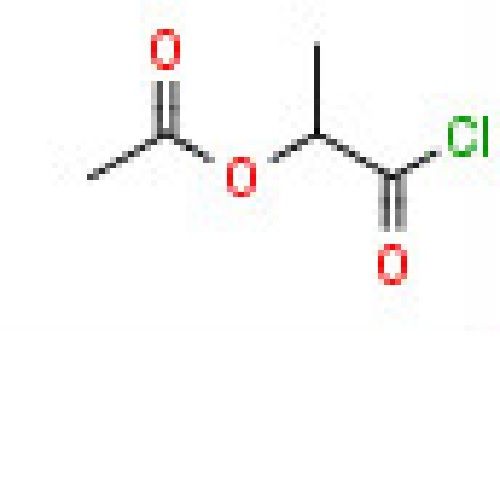
Chemical Name: 2-Acetoxypropionylchloride
Synonyms :1-chloro-1-oxopropan-2-yl acetate
| 2-ACETOXYPROPIONYLCHLORIDE
| (1-chloro-1-oxopropan-2-yl) acetate
Cas No : 38939-83-2
Purity : 90%
MolecularFormula : C5H7ClO3
Molecular Weight: 150.6
Appearance:LiquidApplications in Synthesis and Research2-Acetoxypropionyl chloride serves as a versatile reagent and intermediate in organic synthesis, particularly for pharmaceuticals and agrochemicals. Its reactivity enables efficient introduction of acyloxy groups, facilitating the preparation of complex molecules. Frequently used by industrial and laboratory professionals in India and abroad, it supports advancements in synthesis projects and research activities.
Handling and Storage PrecautionsDue to its corrosive, toxic, and lachrymatory properties, 2-Acetoxypropionyl chloride requires cautious handling. It should be stored in sealed glass bottles or polylined containers, protected from moisture and humidity. Proper ventilation, along with personal protective equipment such as gloves, goggles, and protective clothing, is essential to prevent exposure and ensure safe usage in any handling or processing situation.
FAQ's of 2-Acetoxypropionyl chloride:
Q: How should 2-Acetoxypropionyl chloride be stored for maximum shelf life?
A: To maintain its stability and quality, 2-Acetoxypropionyl chloride must be stored tightly sealed in a cool, dry, and well-ventilated area, away from moisture, humidity, and incompatible substances like water, alcohols, strong bases, or oxidizing agents.
Q: What are the main uses of 2-Acetoxypropionyl chloride?
A: This compound is used mainly as a reagent or intermediate in organic syntheses, pharmaceutical development, and agrochemical research due to its ability to introduce acyloxy groups into molecules.
Q: When should personal protective equipment be worn while handling this product?
A: Personal protective gear-including gloves, eye and face protection, and suitable clothing-must always be worn when handling 2-Acetoxypropionyl chloride, as it can cause severe skin and eye burns and may irritate the respiratory tract.
Q: Where can 2-Acetoxypropionyl chloride be shipped from and in what packaging?
A: In India, suppliers and traders offer this product in sealed glass bottles, polylined containers, and larger drums (25 kg or 50 kg), with transportation as a Class 8 corrosive liquid (UN 3265).
Q: What happens if 2-Acetoxypropionyl chloride comes in contact with water?
A: Contact with water or humid air causes the compound to decompose, releasing hydrogen chloride (HCl) gas, which is corrosive and hazardous. Thus, it must be kept dry and handled only in moisture-free environments.
Q: How is 2-Acetoxypropionyl chloride beneficial in chemical synthesis processes?
A: Its high reactivity and purity (98% min) facilitate efficient acylation reactions, helping chemists synthesize complex intermediates conveniently for pharmaceuticals, agrochemicals, and research compounds.






 Send Inquiry
 Send Inquiry
 Send SMS
 Call Me Free


