Product Description
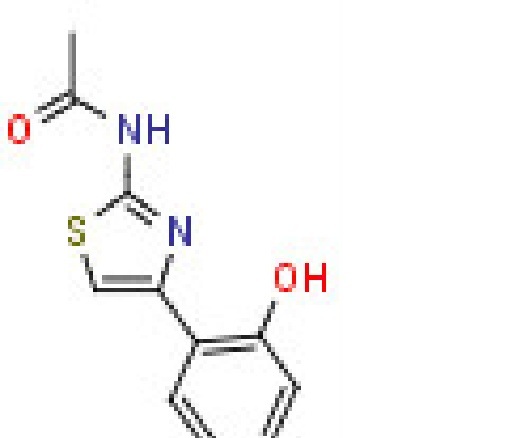
Chemical name: 2-Acetamido-4-(2-hydroxyphenyl)thiazole
Synonyms: N-(4-(2-Hydroxyphenyl)thiazol-2-yl)acetamide
Cas no: 78546-66-4
Purity: 95%
Molecular formula: C11H10N2O2S
Molecular Weight: 234.3
Versatile Chemistry Intermediate2-Acetamido-4-(2-hydroxyphenyl)thiazole serves as a vital intermediate in organic synthesis, including the development of biologically active molecules and pharmaceuticals. Its unique structure, which features hydroxyphenyl, acetamido, and thiazole moieties, makes it an attractive building block for researchers in chemical and pharmaceutical laboratories seeking innovative compound design.
Safe Handling and StorageWhile this substance is not classified as hazardous, it should be handled with care to avoid inhalation, ingestion, and skin or eye contact. The compound is stable if stored at room temperature, protected from light and moisture, and kept in an air-tight container. Proper handling and storage help maintain its integrity over its two-year shelf life.
FAQ's of 2-Acetamido-4- (2-hydroxyphenyl)thiazole:
Q: How should 2-Acetamido-4-(2-hydroxyphenyl)thiazole be stored to ensure maximum stability?
A: It should be stored in a tightly closed container at room temperature, away from light and moisture. Proper storage conditions will preserve its stability for up to two years.
Q: What are the primary uses of this compound in research and industry?
A: 2-Acetamido-4-(2-hydroxyphenyl)thiazole is chiefly used as an intermediate in organic synthesis, the production of pharmaceutical compounds, and the development of biologically active molecules. It is intended solely for research and chemical synthesis applications.
Q: When does this product decompose, and does it have a boiling point?
A: The compound decomposes before reaching its boiling point, so it does not have a specified boiling value. It melts at 208-211C.
Q: Where can this product be used or applied?
A: It is designed for laboratory and research use, particularly in chemical synthesis and the creation of new compounds. It is not suitable for household, drug, or other commercial uses.
Q: What precautions should I follow while handling this chemical?
A: Avoid inhaling dust, ingesting the compound, and allowing it to contact skin or eyes. Use standard laboratory protective equipment and handle it within a well-ventilated workspace.
Q: How is this product typically packaged for delivery?
A: It is usually supplied in 25g or 100g containers, but custom packaging options can be arranged upon request to suit specific research needs.
Q: What are the benefits of using this compound in organic synthesis?
A: The compound's defined purity and stable nature make it reliable for synthesizing complex molecules, leading to improved consistency and efficiency in research projects.






 Send Inquiry
 Send Inquiry
 Send SMS
 Call Me Free


