Product Description
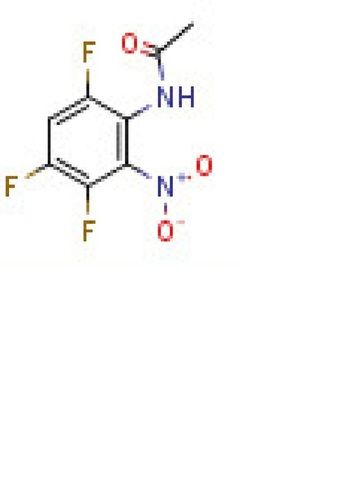
Chemical Name: 2-Acetamido-1-nitro-3,5,6-trifluorobenzene
Synonyms : 2-ACETAMIDO-1-NITRO-3,5,6-TRIFLUOROBENZENE
CAS No : 388-11-4
Purity : 96%
MolecularFormula : C8H5F3N2O3
Molecular Weight: 234.1
Appearance: Solid
Reliable Intermediate for Research and SynthesisThis compound serves as a valuable building block for researchers engaged in pharmaceutical or agrochemical development. With high purity and stringent quality controls, it delivers consistency in chemical reactions. Its adaptability and customizable packing sizes make it suitable for various scales, from small laboratory testing to more extensive synthetic projects.
Handling, Storage, and Safety ProceduresDue to its toxicity and irritation potential, strict handling protocols are essential for safety. Operate within a fume hood, and always wear protective gloves and eye protection. Washing hands thoroughly after use and avoiding direct contact are crucial. Proper storage in a cool, dry, and well-ventilated area helps maintain its stability and extends shelf life to up to two years.
FAQ's of 2-Acetamido -1-nitro-3,5,6-trifluorobenzene:
Q: How should 2-Acetamido-1-nitro-3,5,6-trifluorobenzene be used safely in the laboratory?
A: Work with this compound in a fume hood and always wear appropriate protective gloves and eye protection. To minimize risk, avoid inhalation, ingestion, and direct contact with skin and eyes. After handling, ensure you wash your hands thoroughly.
Q: What are the main applications of this compound?
A: 2-Acetamido-1-nitro-3,5,6-trifluorobenzene is primarily used as an intermediate in the synthesis of pharmaceuticals and agrochemicals. It is also valued in chemical research for the preparation of more complex organic molecules.
Q: When is it necessary to take extra precautions when handling this chemical?
A: Extra care is needed whenever handling bulk quantities, transferring the substance, or performing reactions. Due to its harmful effects if swallowed and potential to cause skin or eye irritation, appropriate personal protective equipment and engineering controls must always be in place.
Q: Where should this substance be stored for maximum stability?
A: Store in a cool, dry, and well-ventilated environment away from direct light. Ensure the container is tightly sealed and kept away from moisture for optimal shelf life and stability.
Q: What is the benefit of using this compound in research and synthesis?
A: Its high purity and stability make it an ideal intermediate for precise and reproducible results in chemical synthesis, particularly in the development of pharmaceuticals and agrochemicals.
Q: How is the product supplied, and what packaging sizes are available?
A: It is available in customizable packaging sizes including 1g, 5g, 10g, 25g, and 100g quantities, catering to different research and industrial requirements.







 Send Inquiry
 Send Inquiry
 Send SMS


