Product Description
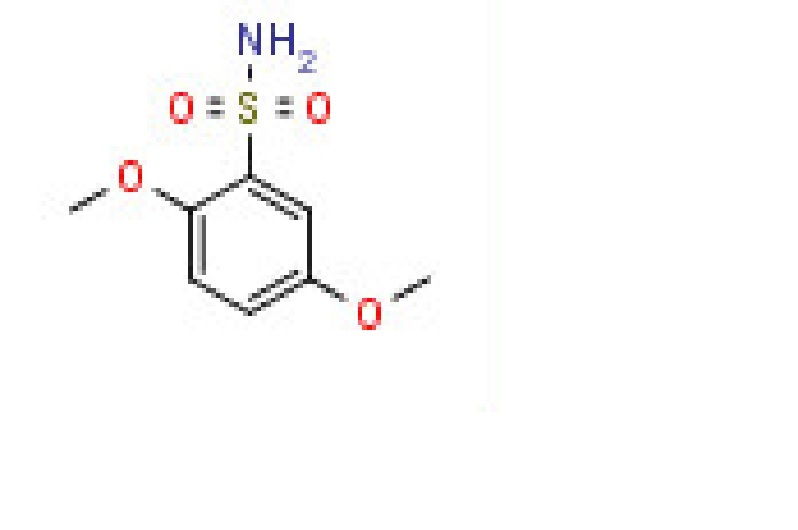
Chemical Name: 2,5-Dimethoxybenzenesulfonamide
Synonyms : Benzenesulfonamide,2,5-dimethoxy-
CAS No : 19116-90-6
Purity : 97%
MolecularFormula :C8H11NO4S
Molecular Weight:217.2
Appearance : SolidApplications in Pharmaceutical and Research Fields2,5-Dimethoxybenzenesulfonamide is principally employed as an intermediate in the synthesis of various pharmaceutical compounds. Its high chemical purity also makes it suitable for chemical research, laboratory processes, and method development. Its versatility is valued in R&D settings where precise, high-quality intermediates are needed.
Safe Storage and Handling GuidelinesTo maintain product integrity, store 2,5-Dimethoxybenzenesulfonamide in a cool, dry place between 2 and 8C, in tightly sealed HDPE containers. As the compound decomposes on exposure to moisture and light, minimizing these exposures is essential for maximizing its two-year shelf life. Follow standard laboratory chemical handling protocols for safety.
FAQ's of 2,5- Dimethoxybenzenesulfonamide:
Q: How should 2,5-Dimethoxybenzenesulfonamide be stored for optimal shelf life?
A: Store the compound in a cool, dry environment at 2-8C, within a tightly sealed HDPE bottle or bag, away from direct light and moisture. Proper storage maintains its stability for up to two years.
Q: What are the primary uses of 2,5-Dimethoxybenzenesulfonamide in laboratory settings?
A: This compound is mainly utilized as a pharmaceutical intermediate and as a reagent in chemical research or synthesis, owing to its high purity and stable characteristics.
Q: When does this substance decompose, and what precautions should be taken?
A: 2,5-Dimethoxybenzenesulfonamide decomposes before reaching its boiling point and may degrade when exposed to moisture or light. Always handle it in dry, low-light conditions to avoid premature decomposition.
Q: Where can this product be safely transported, given its transport classification?
A: The compound is classified as non-hazardous for transportation, allowing it to be shipped both domestically and internationally under standard conditions. No special hazardous material precautions are required.
Q: What process is recommended for the identification of 2,5-Dimethoxybenzenesulfonamide?
A: Identification is usually carried out using NMR, IR spectroscopy, or HPLC, ensuring precise verification of its chemical structure and purity.
Q: How does avoiding strong oxidizing agents benefit the handling of this chemical?
A: Strong oxidizing agents can react violently with 2,5-Dimethoxybenzenesulfonamide, risking decomposition or hazardous reactions. Maintaining compatibility by avoiding these agents ensures safer laboratory practices.







 Send Inquiry
 Send Inquiry
 Send SMS


