Product Description
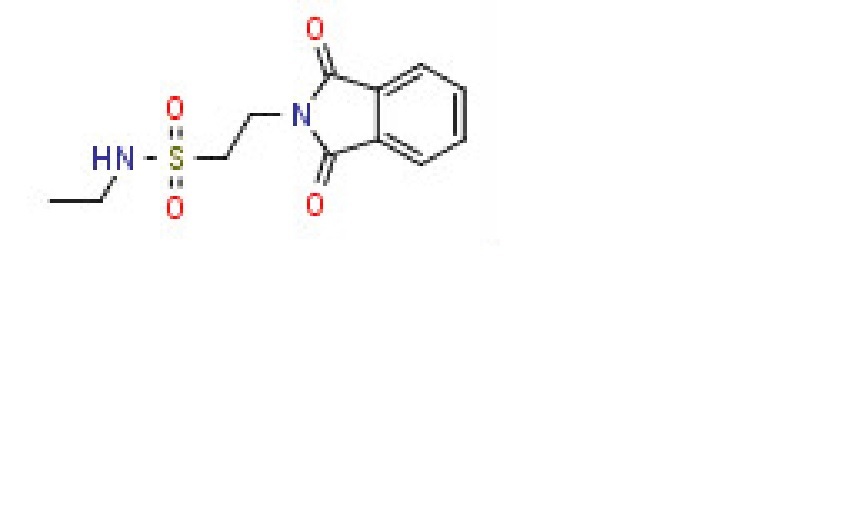
Chemical Name: 2-(1,3-Dioxoisoindol-2-yl)-N-ethylethanesulfonamide
CAS No : 81428-02-6
Purity : 98%
MolecularFormula : C12H14N2O4S
Molecular Weight:282.3
Appearance : SolidVersatile Intermediate for Drug ResearchThis compound serves as a valuable intermediate in pharmaceutical applications and organic synthesis. Its stability and high purity (98%) make it well-suited for drug discovery, research and development, and laboratory-scale synthesis processes. The material's reliable quality supports critical work in both academic and industrial laboratory settings.
Safe, Secure Packaging and HandlingAvailable in sealed HDPE bottles or glass vials, this product is packaged to ensure protection from moisture and contamination. While not classified as hazardous, standard care is recommended, as with all laboratory chemicals. Avoid contact with strong oxidizers and keep containers tightly closed to maximize shelf life and maintain quality.
FAQ's of 2-(1,3-Dioxoisoindol-2-yl)-N- ethylethanesulfonamide:
Q: How should 2-(1,3-Dioxoisoindol-2-yl)-N-ethylethanesulfonamide be stored to ensure stability?
A: Store the compound at 2-8C in a tightly sealed container, in a dry place away from direct sunlight and moisture. Following these storage recommendations will maintain its stability and maximize its shelf life up to two years.
Q: What are the main applications and benefits of using this compound in the laboratory?
A: This compound is primarily used as a pharmaceutical intermediate in drug research and organic synthesis. Its high purity and stable nature support reliable and consistent results in R&D settings, benefiting both academic and industrial labs.
Q: When should precautions be taken while handling this product?
A: Although it is not classified as hazardous under GHS, you should handle it with standard laboratory safety measures, including wearing gloves and avoiding exposure to moisture and strong oxidizers during use or storage.
Q: Where can this chemical be sourced and in what packaging options?
A: It is commonly supplied by traders and suppliers in India and is available in various sizes packaged in sealed HDPE bottles or glass vials to ensure product integrity during transport and storage.
Q: What is the proper process for dissolving this compound for laboratory use?
A: To dissolve the compound, use solvents such as DMSO or DMF, in which it is highly soluble. It is only slightly soluble in methanol and insoluble in water, so choose your solvents accordingly based on experimental needs.
Q: How is this compound transported, and are there any restrictions?
A: This product is not restricted for transport and can be shipped following general good laboratory practice, thanks to its stable, solid form and absence of hazardous classification under GHS.







![N-cyclopropyl-4-hydroxy-N-[(4-methoxyphenyl)methyl]benzene-1 -sulfonamide](https://cpimg.tistatic.com/10866574/b/4/N-cyclopropyl-4-hydroxy-N-4-methoxyphenyl-methyl-benzene-1-sulfonamide.jpg?tr=w300)
 Send Inquiry
 Send Inquiry
 Send SMS
 Call Me Free


