Product Description
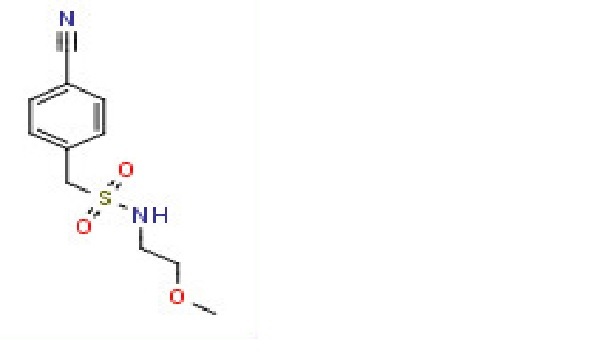
Chemical Name:1-(4-Cyanophenyl)-N-(2-methoxyethyl)methanesulfonamide
Synonyms : 1-(4-cyanophenyl)-N-(2-methoxyethyl)methanesulfonamide
CAS No : 1041567-41-2
Purity : 97%
MolecularFormula : C11H14N2O3S
Molecular Weight: 254.3
Appearance: SolidHigh Purity & StabilityThis compound boasts a purity level of 98.0% by HPLC, with impurities kept below 2.0%. It is stable under standard storage conditions, ensuring consistent performance for your pharmaceutical or research needs. Its shelf life extends up to 24 months when stored as recommended.
Versatile Application in Research1-(4-Cyanophenyl)-N-(2-methoxyethyl) methanesulfonamide serves as a valuable intermediate in the development and synthesis of active pharmaceutical ingredients. Its solubility in DMSO and methanol makes it suitable for a range of laboratory applications, supporting advanced organic synthesis and drug development.
Convenient and Safe PackagingAvailable in 25g, 100g, 500g, and 1kg bottles, as well as customized quantities, this product is packaged to suit various research or commercial requirements. As a non-hazardous and unregulated chemical for transport, it offers ease of storage, handling, and shipping.
FAQ's of 1-(4-Cyanophenyl)-N-(2-methoxyethyl) methanesulfonamide:
Q: How should 1-(4-Cyanophenyl)-N-(2-methoxyethyl) methanesulfonamide be stored for optimal stability?
A: It should be kept in a tightly closed container, stored in a cool, dry, and well-ventilated area away from moisture and direct light to maintain stability and ensure its 24-month shelf life.
Q: What is the primary use of this compound in pharmaceutical research?
A: This compound is mainly used as an intermediate for the synthesis of active pharmaceutical ingredients, making it valuable for drug development and various chemical research applications.
Q: When is this product considered non-hazardous for transport?
A: According to its hazard classification and UN number, 1-(4-Cyanophenyl)-N-(2-methoxyethyl) methanesulfonamide is classified as non-hazardous and not regulated for transport, ensuring safe and straightforward shipping.
Q: Where is this compound supplied from and in what packaging options?
A: It is supplied by traders based in India and is available in 25g, 100g, 500g, and 1kg bottles. Customized packaging options can also be provided to meet specific research needs.
Q: What are the benefits of using this compound in laboratory research?
A: Benefits include its high purity (98%), low impurity level, moisture stability, and versatile solubility in organic solvents, making it suitable for demanding research and synthesis processes.
Q: How is the impurity level of this compound determined?
A: The impurity level is analyzed using High Performance Liquid Chromatography (HPLC) and is maintained below 2.0%, ensuring quality and reliability.
Q: What process is recommended for safe disposal of this compound?
A: While not classified as poisonous or hazardous, standard laboratory chemical disposal procedures should be followed, and local regulations for organic chemical waste should be observed.






![3',4'-Dichloro[1,1'-biphenyl]-4-sulfonyl chloride](https://cpimg.tistatic.com/10898906/b/4/3-4-Dichloro-1-1-biphenyl-4-sulfonyl-chloride.jpg?tr=w300)
 Send Inquiry
 Send Inquiry
 Send SMS
 Call Me Free


