Product Description
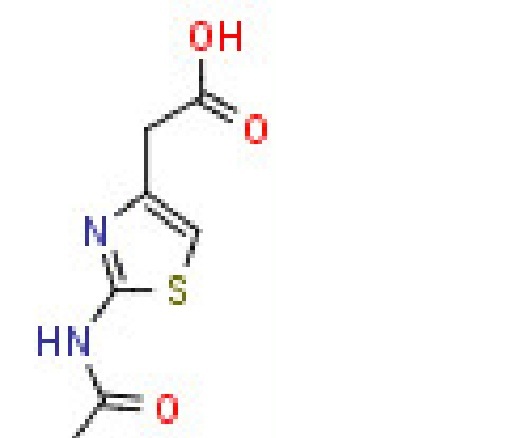
Chemical name: (2-acetamido-1,3-thiazol-4-yl)acetic acid
Synonyms: 2-(2-acetamidothiazol-4-yl)acetic acid
Cas no: 202408-30-8
Purity:95%
Molecular formula: C7H8N2O3S
Molecular Weight: 200.2
Reliable Pharmaceutical Intermediate(2-Acetamido-1,3-thiazol-4-yl)acetic acid serves as a crucial building block in pharmaceutical research and development. Its high purity and stable crystalline form make it particularly useful for drug synthesis and other chemical applications. Used mostly as an API intermediate, its low toxicity and absence of hazardous classification under GHS ensure safety during standard handling and storage. Widely supplied by traders in India, it supports various pharmaceutical advancements.
Proper Storage and Stability MattersTo maintain optimal quality, store (2-acetamido-1,3-thiazol-4-yl)acetic acid in a cool (2-8C), dry, and well-ventilated location, away from direct moisture and light. Packaged typically in HDPE bottles or drums and double polyethylene bags, the product remains stable for up to 24 months when these guidelines are strictly observed. Its hygroscopic nature warrants extra care to avoid humidity exposure, ensuring the compound's integrity is not compromised.
FAQ's of (2-acetamido-1,3-thiazol-4-yl)acetic acid:
Q: How should (2-acetamido-1,3-thiazol-4-yl)acetic acid be stored to maintain its stability?
A: Store the compound at 2-8C in a cool, dry, and well-ventilated area, away from moisture and light, ideally in HDPE bottles or drums with double polyethylene bag protection to preserve its stability and prevent degradation.
Q: What is the primary use of (2-acetamido-1,3-thiazol-4-yl)acetic acid in the pharmaceutical industry?
A: It is mainly utilized as an intermediate in the synthesis of active pharmaceutical ingredients during drug development and other chemical syntheses.
Q: When does (2-acetamido-1,3-thiazol-4-yl)acetic acid start to degrade, and does it have a defined boiling point?
A: This compound decomposes before reaching a boiling point, typically melting at approximately 178-182C, and so it does not have a measurable boiling point.
Q: Where is this product commonly supplied from?
A: The compound is widely distributed by suppliers and traders in India, catering to global pharmaceutical and chemical industries.
Q: What is the recommended process for handling and packaging (2-acetamido-1,3-thiazol-4-yl)acetic acid?
A: Handle using standard laboratory safety procedures, ensuring minimal exposure to moisture due to its hygroscopic nature. It should be packaged in HDPE bottles or drums, often with double polyethylene bags for extra protection.
Q: Is there any benefit to using this compound over similar pharmaceutical intermediates?
A: Its high purity (>98%), low impurity and heavy metal content, and excellent stability under recommended storage conditions make it a reliable choice for sensitive pharmaceutical synthesis applications.
Q: What safety considerations apply when working with (2-acetamido-1,3-thiazol-4-yl)acetic acid?
A: This compound is not classified as hazardous or poisonous under GHS, and toxicological information suggests it is generally regarded as safe when used as intended, though standard laboratory safety practices are still advised.






 Send Inquiry
 Send Inquiry
 Send SMS


