Product Description
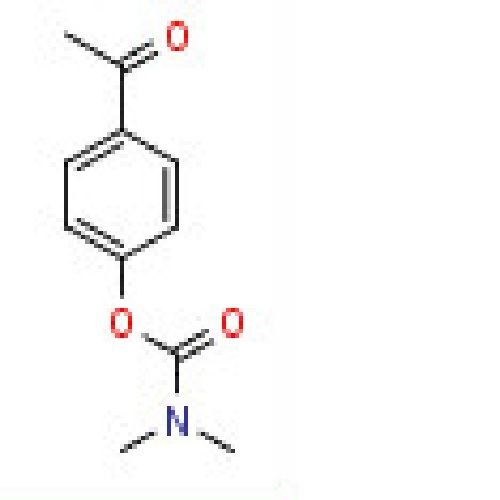
Chemical Name: 4-Acetylphenyldimethylcarbamate
Synonyms :4-ACETYLPHENYL DIMETHYLCARBAMATE
|(4-acetylphenyl) N,N-dimethylcarbamate
| Dimethylcarbamic acid 4-acetylphenyl ester
Cas No : 52916-82-2
Purity : 95%
MolecularFormula : C11H13NO3
Molecular Weight : 207.2Safe Handling and StorageFor occupational safety, it is crucial to handle 4-Acetylphenyl dimethylcarbamate with care. Always wear protective gloves and eye protection, and avoid breathing dust. Store the powder in a cool, dry, well-ventilated location within tightly closed containers, away from moisture. Adhering to these guidelines will maintain product integrity and reduce health risks.
Versatile ApplicationsThis compound is primarily used as an intermediate in the chemical synthesis of carbamate derivatives, making it valuable for pharmaceutical and pesticide industries. Its high purity ensures efficiency and reliability in research and industrial synthesis, supporting further advancements in organic chemistry.
FAQ's of 4-Acetylphenyl dimethylcarbamate:
Q: How should 4-Acetylphenyl dimethylcarbamate be stored to ensure stability?
A: The compound should be stored in a tightly closed container in a cool, dry, and well-ventilated place, away from moisture. Proper storage maintains its stability and prevents degradation.
Q: What is the main usage of 4-Acetylphenyl dimethylcarbamate?
A: It is mainly utilized as an intermediate for the synthesis of pharmaceuticals, pesticides, and other organic compounds in chemical research and production.
Q: When is protective equipment required during the handling of this product?
A: Protective gloves and eye protection are required whenever handling this compound to minimize risk of skin or eye contact and inhalation of dust.
Q: Where can this product be applied most effectively?
A: It is most effective in industrial and laboratory settings engaged in the synthesis of carbamate-based chemicals, pharmaceuticals, and pesticide intermediates.
Q: What is the process for disposing of 4-Acetylphenyl dimethylcarbamate?
A: Disposal must be carried out in accordance with local regulations. Contents and container should be disposed of via qualified waste management facilities.
Q: How does the product benefit chemical synthesis applications?
A: Its high purity and stability under recommended storage conditions make it a reliable intermediate, enhancing efficiency and yield in synthesis processes.






 Send Inquiry
 Send Inquiry
 Send SMS
 Call Me Free


