Product Description
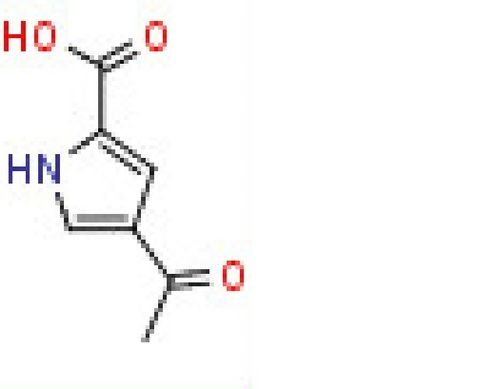
Chemical Name: 4-Acetyl-1h-pyrrole-2-carboxylicacid
Synonyms :4-acetyl-1H-pyrrole-2-carboxylic Acid
| 1H-Pyrrole-2-carboxylic acid, 4-acetyl-
| 4-ACETYL-1H-PYRROLE-2-CARBOXYLICACID
Cas No : 16168-93-7
Purity : 95%
MolecularFormula : C7H7NO3
Molecular Weight :153.1Crucial Intermediate for Organic Synthesis4-Acetyl-1H-pyrrole-2-carboxylic acid serves as a valuable building block in synthetic chemistry. Its unique structure lends itself to the preparation of heterocyclic compounds and biologically-active molecules. Researchers and industry professionals rely on its high purity and consistent quality for precise and efficient reactions during pharmaceutical and chemical research.
Handling and Storage RecommendationsFor maximum stability, store the compound in a cool (2-8C), dry place, protected from direct light and moisture. Use only under standard laboratory safety protocols. The material maintains its properties for up to 24 months when stored properly, reducing risk of degradation and ensuring reliable performance in repeated uses.
FAQ's of 4-Acetyl-1h-pyrrole-2-carboxylic acid:
Q: How is 4-Acetyl-1H-pyrrole-2-carboxylic acid typically synthesized?
A: This compound is produced via acetylation of 1H-pyrrole-2-carboxylic acid under controlled laboratory conditions, resulting in a high-purity crystalline powder suitable for research and development purposes.
Q: What is the recommended method for storing this material to ensure stability?
A: Store 4-Acetyl-1H-pyrrole-2-carboxylic acid at 2-8C in well-sealed containers, away from light and moisture. This helps maintain its integrity and prolongs shelf life up to 24 months.
Q: When is 4-Acetyl-1H-pyrrole-2-carboxylic acid most commonly used in research?
A: It is typically employed during the synthesis of heterocyclic compounds and various biologically active molecules, making it essential in pharmaceutical intermediate production and chemical research.
Q: Where should this compound be handled and used?
A: It should be handled and used within standard laboratory environments equipped with appropriate safety measures, as there is no data indicating it is poisonous but it should be treated with care.
Q: What benefits does 4-Acetyl-1H-pyrrole-2-carboxylic acid offer in laboratory settings?
A: Its high purity (>98%) and stability under recommended conditions make it a reliable choice for accurate and reproducible results in analytical, laboratory, and research applications.
Q: How should this compound be disposed of after use?
A: Dispose of any waste material according to local regulations for laboratory chemicals. Consult your facility's waste management protocol to ensure safe and proper disposal.
Q: What are the main properties that users should be aware of?
A: The compound presents as a stable, slightly water-soluble crystalline powder with a characteristic odor. It decomposes before boiling and is sensitive to light and moisture, which requires careful storage and handling.






![6-Amino-3-aza-bicyclo[3.1.1]heptane-3-carboxylic acid](https://cpimg.tistatic.com/09725221/b/4/6-Amino-3-aza-bicyclo-3-1-1-heptane-3-carboxylic-acid.jpg?tr=w300)
![3-[5-(Anilinocarbonyl)-1,3,4-thiadiazol-2-yl]propanoic acid](https://cpimg.tistatic.com/10001032/b/4/3-5-Anilinocarbonyl-1-3-4-thiadiazol-2-yl-propanoic-acid.jpg?tr=w300)
 Send Inquiry
 Send Inquiry
 Send SMS
 Call Me Free


