Product Description
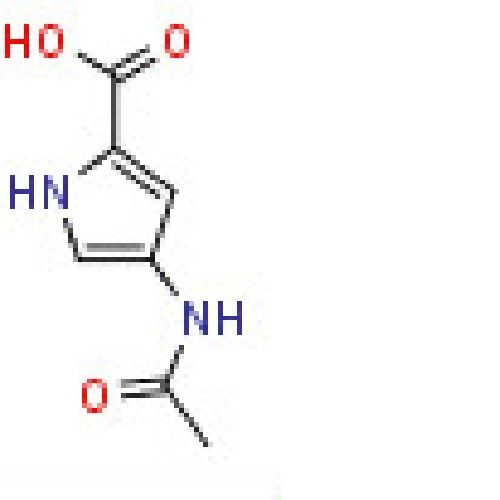
Chemical Name: 4-Acetamido-1h-pyrrole-2-carboxylicacid
Synonyms :4-Acetamido-1H-pyrrole-2-carboxylicacid
|4-AcetylaMino-1H-pyrrole-2-carboxylicacid
|4-Acetamido-1H-pyrrole-2-carboxylicacid
Cas No : 1416404-59-5
Purity : 95%
Molecular Formula : C7H8N2O3,Molecular Weight : 168.2Superior Stability and PurityThis compound offers exceptional stability when stored between 2-8C and remains non-hygroscopic, making it easy to handle. Its high purity (98%) makes it ideal for precise analytical or synthesis work, reducing the need for additional purification steps in the laboratory.
Versatile Applications in Research and SynthesisUsed extensively as a pharmaceutical intermediate, 4-Acetamido-1H-pyrrole-2-carboxylic acid supports synthetic research and the creation of novel pyrrole derivatives. Its specific solubility profile allows selective use in various solvents, particularly DMSO, facilitating flexible experimental design.
FAQ's of 4-Acetamido-1h-pyrrole-2-carboxylic acid:
Q: How should 4-Acetamido-1H-pyrrole-2-carboxylic acid be stored for optimal shelf life?
A: Store the compound in a tightly sealed container at 2-8C in a cool, dry, and well-ventilated area. Proper storage under these conditions ensures stability and a shelf life of up to two years.
Q: What are the primary uses of 4-Acetamido-1H-pyrrole-2-carboxylic acid?
A: It is predominantly used as a pharmaceutical intermediate, a research chemical in laboratories, and for synthesizing functionalized pyrroles in organic synthesis.
Q: When is this compound considered stable and safe to use?
A: 4-Acetamido-1H-pyrrole-2-carboxylic acid is stable under recommended storage conditions and is classified as non-hazardous according to GHS standards. However, it should be kept away from strong oxidizers to maintain its integrity.
Q: Where does the compound exhibit optimal solubility, and what solvents should be avoided?
A: The compound dissolves well in DMSO, is sparingly soluble in water, and is insoluble in most organic solvents. Choose DMSO for most applications requiring dissolution; avoid attempting to dissolve it in common organic solvents like hexane or ethyl acetate.
Q: What benefits does this compound provide in research or chemical synthesis?
A: Its high analytical purity, non-hygroscopic nature, and defined chemical properties allow for reliable and reproducible results in laboratory workflows, reducing variability and enhancing research outcomes.
Q: How should this compound be handled regarding hazardous or poisonous properties?
A: This product is non-poisonous under standard handling and does not fall under hazardous GHS classification. Standard laboratory safety measures should still be followed during use.






![6-Amino-2-aza-spiro[3.3]heptane-2,6-dicarboxylic acid 2-tert-butyl ester](https://cpimg.tistatic.com/09725293/b/4/6-Amino-2-aza-spiro-3-3-heptane-2-6-dicarboxylic-acid-2-tert-butyl-ester.jpg?tr=w300)
 Send Inquiry
 Send Inquiry
 Send SMS


