Product Description
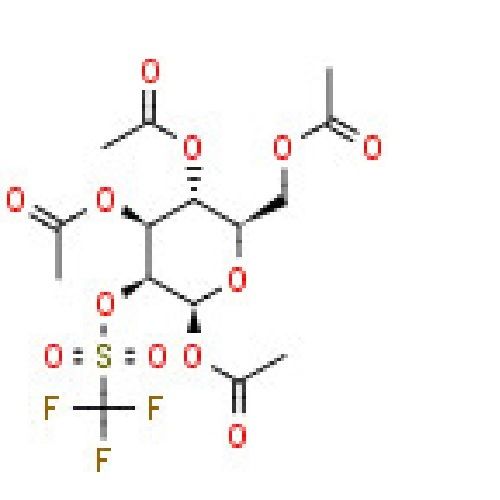
Chemical Name: (2S,3S,4S,5R,6R)-6-(Acetoxymethyl)-3-(((trifluoromethyl)sulfonyl)oxy)tetrahydro-2H-pyran-2,4,5-triyltriacetate
Cas No : 92051-23-5
Purity : 95%
MolecularFormula : C15H19F3O12S
Molecular Weight:480.4
High Purity and Defined StereochemistryThis research-grade compound, with purity greater than 98%, guarantees reliable results for synthetic applications. Its stereochemistry enables enantioselective reactions, crucial for advanced carbohydrate and organic synthesis. The crystalline powder form further facilitates precise measurement and handling in laboratory protocols.
Safe Handling and Storage RecommendationsTo ensure stability and safety, store the compound in tightly sealed amber glass bottles within a refrigerated environment (2-8 C). Prevent exposure to moisture or light, as these can lead to decomposition. Always use gloves and protective eyewear, minimizing potential skin and eye irritation during laboratory procedures.
FAQ's of (2S,3S,4S,5R,6R)-6-(Acetoxymethyl)-3-(((trifluoromethyl)sulfonyl)oxy)tetrahydro-2H-pyran-2,4,5-triyl triacetate:
Q: How should (2S,3S,4S,5R,6R)-6-(Acetoxymethyl)-3-(((trifluoromethyl)sulfonyl)oxy)tetrahydro-2H-pyran-2,4,5-triyl triacetate be stored for maximum stability?
A: Store the compound refrigerated between 2-8 C in tightly sealed amber glass bottles, protected from moisture and direct sunlight, to maintain its integrity for up to two years.
Q: What is the recommended method for safe handling of this peracetylated pyranose triflate in research settings?
A: Wear suitable gloves and eye protection to avoid skin and eye contact; handle under dry conditions and avoid unnecessary exposure due to its potential irritant properties.
Q: When is it typically used in organic synthesis or carbohydrate chemistry?
A: This compound functions as an intermediate or glycosylation agent, especially valuable in carbohydrate synthesis and research requiring stereochemical precision.
Q: Where is it applicable in laboratory research or industrial settings?
A: It is primarily utilized in laboratories for advanced organic synthesis and carbohydrate research, supporting various procedures where defined stereochemistry and high purity are essential.
Q: What are the main benefits of using this compound in synthetic processes?
A: Its high purity, stereochemical definition, and compatibility with enantioselective reactions make it a preferred choice for reliable and precise laboratory synthesis.
Q: How should the compound be transported for safety and compliance?
A: It is not classified as hazardous for air, sea, or road transport, but packaging in amber glass bottles ensures protection against environmental contaminants during transit.






![2-Azabicyclo[2.2.1]heptane-6-carboxylic acid hydrochloride](https://cpimg.tistatic.com/10032312/b/4/2-Azabicyclo-2-2-1-heptane-6-carboxylic-acid-hydrochloride.jpg?tr=w300)
 Send Inquiry
 Send Inquiry
 Send SMS


