Product Description
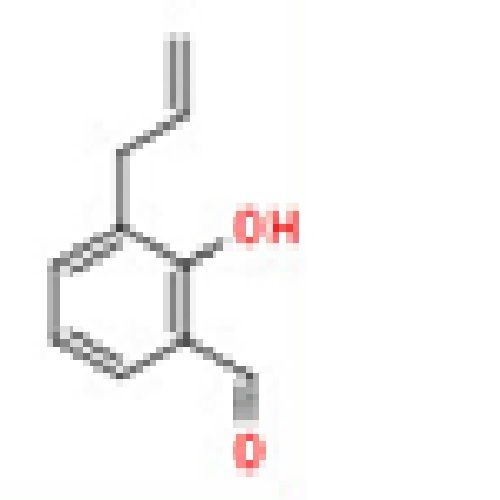
Chemical Name:3-Allylsalicylaldehyde 95%
Synonyms:3-Allyl-2-hydroxybenzaldehyde |3-Allylsalicylaldehyde
3-Allyl-2-hydroxy-benzaldehyde|2-hydroxy-3-prop-2-enylbenzaldehyde
Cas No : 24019-66-7|Purity : 95% |Molecular Formula : C10H10O2
Molecular Wight :162.2
Appearance: LiquidKey Benefits and Applications3-Allylsalicylaldehyde provides valuable utility as a pharmaceutical intermediate and in the synthesis of aromatic compounds. Its strong odor and reactive functional groups make it suitable for research, flavors, and fragrances industry. The material's compatibility with organic solvents and stable storage properties enhance its versatility for various laboratory or industrial settings.
Safe Handling and Storage AdviceWhen working with 3-Allylsalicylaldehyde, always use protective equipment and avoid contact with skin and eyes. Its hazardous nature requires proper handling, including storage in tightly sealed containers away from sources of ignition and direct light. Ensure good ventilation in working areas and store at room temperature to maintain product integrity for up to two years.
Regulatory and Packaging InformationThis product is intended strictly for laboratory and research applications-it is not suitable for any pharmaceutical, food, or household use. Packaging options include amber glass bottles and HDPE containers designed to protect the aldehyde from light and contamination. It is not regulated as a dangerous good for transport under current guidelines.
FAQ's of 3-Allylsalicylaldehyde 95%:
Q: How should 3-Allylsalicylaldehyde be properly stored to maintain its stability?
A: To ensure stability, 3-Allylsalicylaldehyde should be stored in tightly closed amber glass bottles or HDPE containers, kept in a cool, dry, and well-ventilated place, and protected from sources of ignition and direct sunlight. This helps preserve its quality and extends its shelf life for up to two years.
Q: What is the main usage of 3-Allylsalicylaldehyde in research and industry?
A: 3-Allylsalicylaldehyde is predominantly used as an intermediate in the synthesis of pharmaceuticals, aromatic compounds, flavors, and fragrances. Its reactive aldehyde and allyl groups enable diverse chemical transformations in organic synthesis and related research applications.
Q: When should personal protective equipment be used while handling this compound?
A: Personal protective equipment such as gloves, eye protection, and laboratory coats must be worn whenever handling 3-Allylsalicylaldehyde. Adequate ventilation is also necessary, as the compound may cause skin and eye irritation and is harmful if inhaled or ingested.
Q: Where can 3-Allylsalicylaldehyde be safely utilized?
A: This chemical is suitable for controlled environments such as research laboratories or industrial facilities, where proper safety equipment, procedures, and trained personnel are in place. It is not for household, food, or medicinal applications.
Q: What purification methods are recommended for 3-Allylsalicylaldehyde?
A: Distillation under reduced pressure or chromatographic purification are recommended methods to achieve high purity of 3-Allylsalicylaldehyde. These processes help remove impurities and maintain product consistency for laboratory use.
Q: How is 3-Allylsalicylaldehyde transported, and is it regulated as a hazardous material?
A: 3-Allylsalicylaldehyde is not classified as a dangerous good for transport, allowing it to be shipped according to standard procedures. It is available in packaging designed to maintain safety and product integrity during transit.
Q: What benefit does its aromatic and allyl structure offer in chemical reactions?
A: The aromatic allyl structure of 3-Allylsalicylaldehyde allows it to undergo typical reactions of both aldehydes and allyl aromatics. This offers chemists opportunities to create complex molecular frameworks used in pharmaceutical and fragrance synthesis.






![-[(2E)-3-Allyl-4-chloro-5-formyl-1,3-thiazol-2(3h)-ylidene]thiophene-2-sulfonamide 95%](https://cpimg.tistatic.com/09735044/b/4/-2E-3-Allyl-4-chloro-5-formyl-1-3-thiazol-2-3h-ylidene-thiophene-2-sulfonamide-95-..jpg?tr=w300)
 Send Inquiry
 Send Inquiry
 Send SMS
 Call Me Free


