Product Description
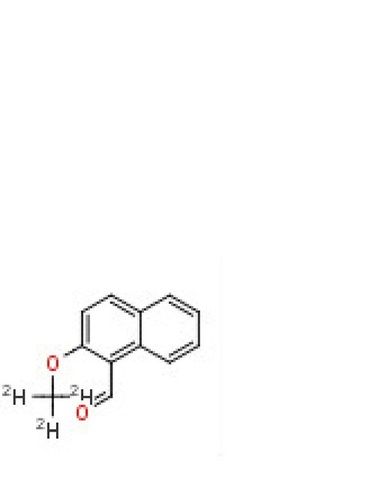
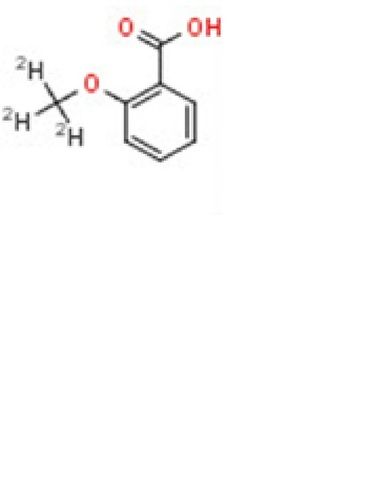
Chemical Name: 2-(Methoxy-d3)naphthalene-1-carbaldehyde
Synonyms : 2-(Trideuteriomethoxy)naphthalene-1-carbaldehyde
Cas No : 2407068-30-6
Purity : 95%
MolecularFormula : C12H10O2
Molecular Weight: 189.2
Appearance: Solid
Supreme Isotopic Purity for Advanced ResearchWith an isotopic enrichment exceeding 98 atom % D, 2-(Methoxy-d3) naphthalene-1-carbaldehyde offers high precision for stable isotope labeling. Its deuterated methoxy group enables meticulous tracing and analysis in pharmaceutical development and organic chemistry research, supporting a range of structural and mechanistic studies.
Reliable Performance and Safe HandlingThe compound is classified as non-hazardous, ensuring safer laboratory procedures. Supplied in amber glass vials, it remains stable under recommended storage and is resilient to normal laboratory conditions, making it suitable for long-term research projects. Standard chemical precautions are still advisable for responsible handling.
Versatile Solubility and Application Scope2-(Methoxy-d3) naphthalene-1-carbaldehyde is slightly soluble in water but dissolves readily in organic solvents such as DMSO, ethanol, and methanol. This characteristic allows seamless integration into diverse research workflows, especially in synthesis, assay development, and analytical standard preparations.
FAQs of 2-(Methoxy-d3) naphthalene-1-carbaldehyde:
Q: How should I properly store 2-(Methoxy-d3) naphthalene-1-carbaldehyde to ensure maximum stability?
A: Store the compound in a tightly closed amber glass vial placed in a cool, dry area, away from light and prolonged exposure to air to maintain stability and prevent hydrolysis.
Q: What are the main applications and benefits of using this deuterated compound?
A: It serves as a valuable tool in stable isotope labeling, organic synthesis, pharmaceutical research, and as an analytical standard, offering high isotopic and chemical purity for accurate experimental outcomes.
Q: When does this compound exhibit the highest stability and effectiveness?
A: It maintains optimal stability and chemical properties when stored as recommended and used within its two-year shelf life, under controlled laboratory conditions.
Q: Where is this compound primarily supplied and who are the typical users?
A: It is predominantly supplied to research laboratories, pharmaceutical developers, and academic institutions across India for laboratory and non-commercial purposes.
Q: What process should be followed when handling or using this compound in research?
A: Use standard chemical handling procedures such as wearing gloves, safety glasses, and working in well-ventilated areas. Although classified as non-hazardous, normal laboratory precautions should always be observed.
Q: How can I utilize its solubility properties in experimental setups?
A: Dissolve the compound in suitable organic solvents like DMSO, methanol, or ethanol for use in reaction mixtures or analytical assays where its deuterated nature is essential.






 Send Inquiry
 Send Inquiry
 Send SMS
 Call Me Free


